
Reviewed · PRIVATE
Introductory Semi-Private Kitesurf Lesson
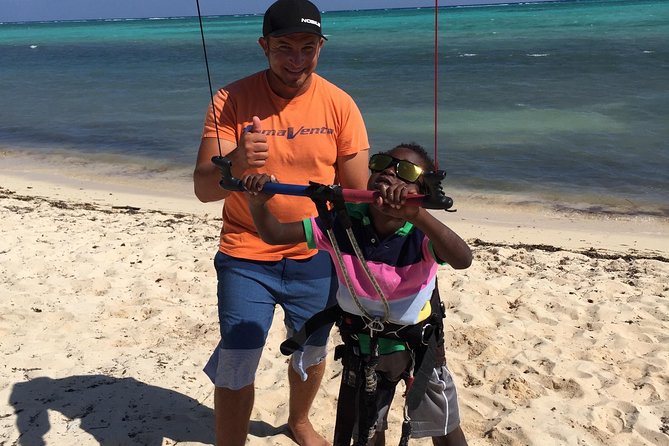
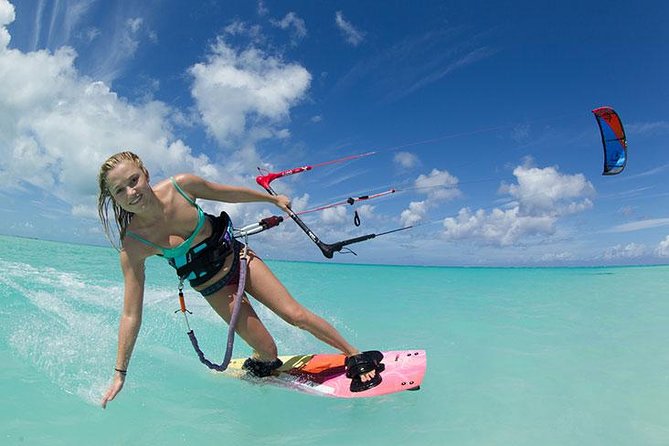
Kitesurfing looks wild from shore, but this two-hour semi-private lesson breaks it into manageable steps: first control the kite, then add the board and try your first water starts. At Seven Mile Beach, the clear, shallow water and reliable wind can give beginners a friendly place to learn, though the weather still decides how much you accomplish.
I like the one-instructor, two-person format, which gives you far more attention than a large class while cutting the per-person price to $200 when two people book together. I also like that equipment and selected hotel pickup are included. The main catch is that you share one kite and board, so your active practice time is not the same as booking a private lesson.
Key points to know before booking
- Two-hour lesson for up to two people: Pay $400 per group, or $200 each when two people share.
- Kite skills come first: You learn to fly and control the kite before trying the board.
- Shallow Cayman water helps beginners: The teaching area has been described as clear and knee-deep, though conditions vary.
- Several instructors receive strong praise: Pedro, Louis, Will, Jhon, and Miguel are named in past experiences.
- Pickup can simplify the day: Hotel pickup and return are offered at selected hotels, with port pickup noted for cruise passengers.
- Weather controls the schedule: Poor conditions can lead to a new date or a full refund.
Why this two-hour Cayman lesson works for beginners
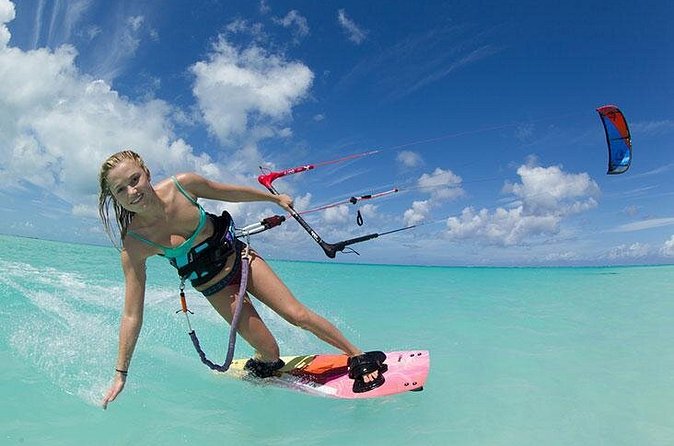
Kitesurfing asks you to manage several things at once: wind direction, kite position, body balance, and board control. A good first lesson does not throw all of that at you immediately. Here, the teaching begins on land or in the shallows with the kite itself.
You learn how to fly it, handle it, and control its power. That first stage matters more than it sounds. If the kite is not under control, the board only adds confusion. Once your kite skills are steady, the instructor brings in the board and works toward those first water starts and short board runs.
That order is sensible for a beginner. You may finish standing and riding briefly, or you may spend much of the session learning kite control and body position. Wind, confidence, fitness, and previous experience all affect the result. Some people progress quickly, while others need several lessons before they can ride independently.
The format is semi-private, with only one other person in the lesson. That gives you direct instruction without the full cost of a solo session. You and your companion share the kite and board, so you will take turns rather than practice continuously. For a first taste, that can be a good trade. You have time to watch the instructor demonstrate and to see what the other person is doing right or wrong.
If you already kiteboard, this introductory lesson may feel basic. One person with past experience progressed from frequent falls to riding upwind and downwind after several lessons, not one. The two-hour session is best viewed as a starting point, not a promise that you will master the sport before lunch.
More lessons and classes in Grand Cayman:
- Private Swim Lesson or Triathlon Training on Seven Mile Beach!
★ 5.0 · 6 reviews
Seven Mile Beach, shallow water, and the Cayman setting
The activity takes place at Seven Mile Beach, one of Grand Cayman’s best-known stretches of coast. The exact teaching area has also been described as a protected national seashore spot reached by an unpaved road. That rough approach is part of the setting, but it may surprise you if you expect a polished beach club entrance.
The teaching conditions are the real attraction. Past instruction has taken place in calm, clear, shallow water, with one description calling it knee-deep. Shallow water lets an instructor walk out with you and correct your position without sending you immediately into deep water. For a first lesson, that can make a real difference.
The water is not guaranteed to be calm every day. Kitesurfing needs wind, but a beginner also needs conditions that are manageable. The operator may cancel or reschedule if the weather is poor, and that is a benefit rather than a nuisance. It is better to lose a few hours to weather than force a first lesson in unsafe conditions.
The beach setting also gives companions something to do while they wait, though the supplied details do not promise a separate spectator program or beach facilities. Bring the usual sun protection for a Cayman beach day, but do not assume that every personal item or extra service is supplied. The confirmed inclusions are equipment and selected hotel transportation.
What happens during the two-hour session
Your lesson follows a clear progression, even if the exact timing changes with the wind and your ability.
Pickup and arrival
Hotel pickup and drop-off are included for selected hotels. If you are staying elsewhere, confirm the meeting point before you book. Cruise passengers need to provide the ship name, docking time, disembarkation time, and re-boarding time when making the reservation.
This matters because a cruise day in Grand Cayman is controlled by the ship’s schedule. Give yourself enough margin after the lesson to return to the port and board on time. Pickup directly outside the port has been arranged for at least some cruise sessions, but you should provide the required ship details rather than assume the timing will work automatically.
A few more Grand Cayman half-days worth weighing up
- Stingray City Experience Plus Two Snorkeling Stops on Grand Cayman
★ 5.0 · 1,477 reviews - Starfish Point, Stingray City & Coral Garden (3-STOP Adventure)
★ 4.5 · 1,168 reviews - Night Bioluminescence Snorkel Tour
★ 5.0 · 987 reviews - Stingray City and Starfish Experience with Coral Reef Snorkeling
★ 4.5 · 924 reviews
Equipment and kite control
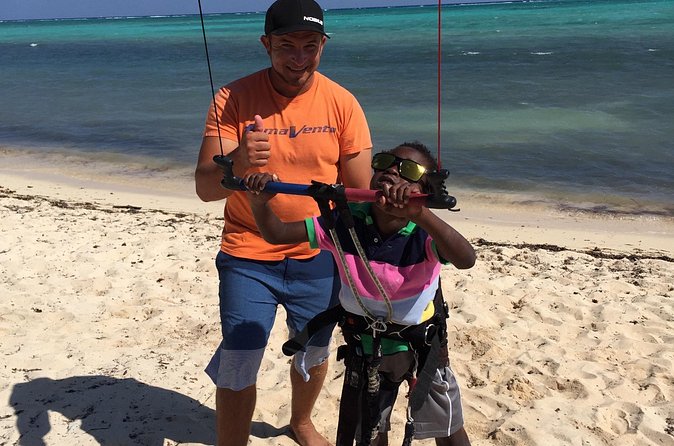
All necessary kitesurfing equipment is included. You do not need to arrive with a kite or board, and the equipment has been described as being in very good shape during extended rentals. The instructor introduces the kite first and shows you how to fly and control it.
This is the part where patience pays. You may spend time steering, managing power, and learning what the kite does as it moves through the wind. The goal is not simply to hold the kite. It is to understand how your movements affect it, so you can make deliberate corrections once you are in the water.
Past instruction has used radios, allowing the instructor to communicate while you are in the water. That is particularly useful when the wind carries you away from the beach or when visual demonstrations are hard to follow. Radio use is mentioned in the experience history, but you should confirm current equipment and teaching methods when booking.
First water starts and board runs
Once the kite handling is good enough, you add the board. The instructor works with you on positioning, timing, and the first attempt to rise out of the water.
This is usually the memorable part of the lesson, but it can also be the most frustrating. You may stand for a moment, lose balance, and repeat the process several times. The supplied experiences include beginners who were standing on the board by the end of a first semi-private lesson, but that outcome is not guaranteed.
If you are learning with a partner, the other person may be practicing while you watch. Pay attention during those pauses. You can learn from the instructor’s correction and from seeing how a small change in kite position affects the result. The shared format also keeps the cost down, but anyone wanting constant board time should consider a private lesson.
The instructors and the value of personal attention
The names connected with past lessons include Pedro, Louis, Will, Jhon, and Miguel. Pedro is described as patient and thorough, while Louis is credited with helping both members of one couple stand on the board during their first semi-private lesson. Will has taught visitors over two days, and Miguel is praised for patience during a longer five-day learning program.
Jhon appears both as an owner and instructor, with strong attention to communication and conditions. Natasha handles scheduling and email in some experiences, and her prompt coordination is useful if you need to fit the lesson around a vacation or cruise stop.
Staff assignments can change, so do not book on the assumption that a specific instructor will teach you unless the operator confirms it. The consistent point is the small class size. With one other person in your group, the instructor can watch your kite position and body movement closely, then give immediate corrections.
The experience is also private in the sense that only your own group participates. That does not mean one instructor and one kite for every individual. It means you are not placed in a large public class. The distinction is worth understanding before you pay.
Is $400 good value for two people?
The price is $400 per group of up to two. With two people sharing, that works out to $200 each, including equipment and selected hotel pickup and return. For a sport that requires specialized gear and close instruction, that is a reasonable way to try kitesurfing without buying equipment or paying the full cost of a private session.
The value improves if you and your companion have similar goals. A couple, parent and older child, or two friends can learn side by side and encourage each other. One family used the format with a 9-year-old and a parent, while another couple booked two lessons over two days. The provided information says most people can participate, but it does not set a specific minimum age or promise that every child is suitable.
The value is weaker if you want uninterrupted practice. Sharing the board and kite means your two hours are split between two people. A private lesson costs more, but you may progress faster because the instructor’s attention and equipment remain with you.
A useful plan is to treat the semi-private lesson as an introduction. If you enjoy it and want to progress, a later private lesson may help you build skills more quickly. Several people continued with additional instruction, and one experienced participant made much more progress after multiple days than after a single session.
Who should book this experience?
I would choose this lesson if you want an active Cayman excursion that feels different from a standard beach day. It suits first-timers who are curious about kitesurfing but do not want to commit to several days of training.
It is also a good match for two people who want to learn together. You can split the cost, share the excitement, and watch each other’s attempts. The experience may suit families with older children, but the data does not provide a firm age rule, so ask before booking for a child.
Cruise passengers can also make it work, provided the operator has your full ship schedule and the lesson leaves enough time for your return. Pickup arrangements can help, but port-day timing always deserves caution.
I would not choose this as a quick guaranteed thrill. Weather can cancel the session, the wind can change, and your first attempts may involve plenty of falling. You also need to be comfortable with a physical water activity and with sharing equipment.
Booking, weather, and practical details
Confirmation is normally sent at booking. Reservations made within one day of the lesson are confirmed as soon as possible and remain subject to availability.
You can cancel for a full refund if you do so at least 24 hours before the start time. Changes or cancellations inside that 24-hour window are not accepted for a refund. The cut-off uses local Cayman time, so check the time carefully if you are booking from another time zone.
Poor weather is handled differently. If the operator cancels because conditions are not suitable, you are offered another date or a full refund. That policy is important for kitesurfing because wind and safety are central to the activity, not minor scheduling details.
Bring a swimsuit and arrive ready for a water lesson, but remember that the confirmed inclusions are equipment and transportation at selected hotels. The supplied information does not confirm meals, towels, lockers, or personal photography, so ask if any of those matter to you.
My recommendation for this Seven Mile Beach lesson
I recommend the Introductory Semi-Private Kitesurf Lesson for two people who want a serious first look at the sport. The best reasons are the shallow teaching water, small group size, included equipment, and instructors who have shown patience with complete beginners and older learners.
Book it with realistic expectations. You might stand on the board during your first session, but you might also spend the full two hours building kite control. If you want maximum practice time, pay for a private lesson. If you want a lower-cost introduction with a friend, partner, or family member, the semi-private option offers a smart balance of personal instruction and price.
FAQ
How long is the introductory kitesurf lesson?
The lesson lasts approximately two hours.
How many people can join for $400?
The price covers one group of up to two people. The lesson is semi-private, so you share the kite and board with the other person in your group.
Is equipment included?
Yes. The necessary kitesurfing equipment is included.
Is hotel pickup available?
Hotel pickup and drop-off are offered at selected hotels. Cruise passengers must provide their ship name, docking time, disembarkation time, and re-boarding time when booking.
What will I learn during the lesson?
You first learn how to fly, handle, and control the kite. Once your kite skills are ready, the lesson moves to the board, with practice on first water starts and board runs.
What happens if the weather is poor?
The experience requires good weather. If it is canceled because of poor conditions, you can choose another date or receive a full refund. You can also cancel at least 24 hours before the start time for a full refund.
Just added around Grand Cayman
- Sunrise at Stingray City, Private Tour★ 5.0 · 6 reviews
- Private Stingray City Snorkeling and BioBay Charter for 10 Guests★ 5.0 · 5 reviews
- Stingray City and Seven Mile Beach Adventure Tour★ 4.5 · 3 reviews
- Private Full Day Charter – Stingray City, Starfish Point, Kaibo & Snorkeling★ 5.0 · 5 reviews
- Full-Day Private Stingray City Snorkeling and Starfish Beach Tour★ 5.0 · 3 reviews
- Private Tour to Stingray City & Snorkeling at Coral Gardens★ 5.0 · 3 reviews
- Grand Cayman Private Customized Bus Tour★ 5.0 · 3 reviews
- Grand Cayman Stingray City and Reef Snorkeling Combo Tour★ 4.5 · 3 reviews
Private, compared.
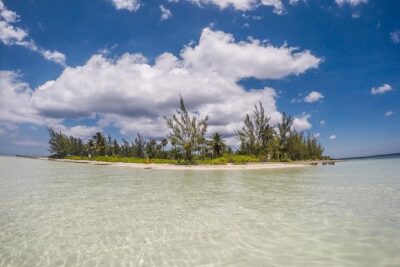
Private, luxury, custom charters to Stingray City, Snorkeling & More
Read our review →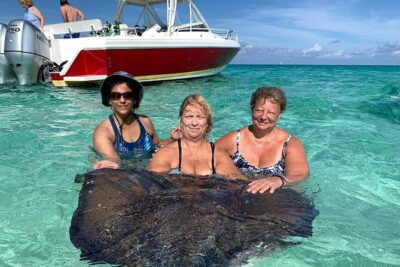
Private Half Day Stingray City, Snorkeling and Starfish Beach Tour
Read our review →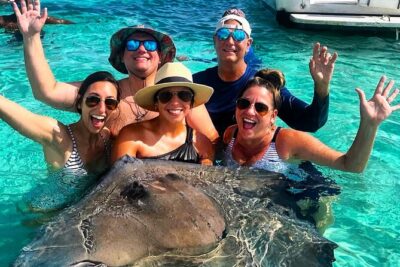
Private Charter 34ft Express Cruiser Stingay City Reef Snorkeling
Read our review →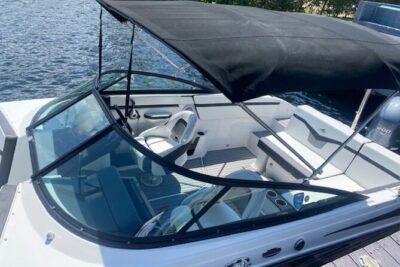
Stingray City, Star fish Point and Snorkeling Private Boat Tour
Read our review →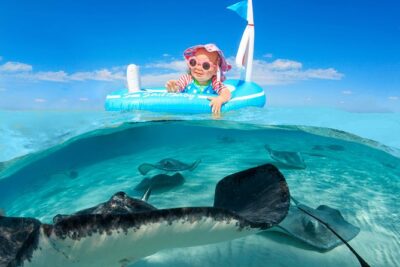
Private Stingray City and Snorkeling Half Day Charter for 6 Guest
Read our review →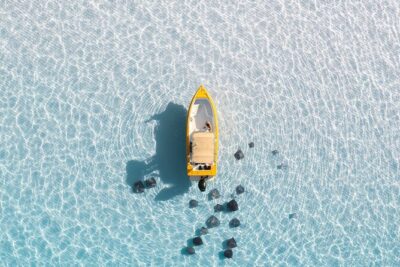
Private Boat Tours: Customize Your Grand Cayman Adventure!
Read our review →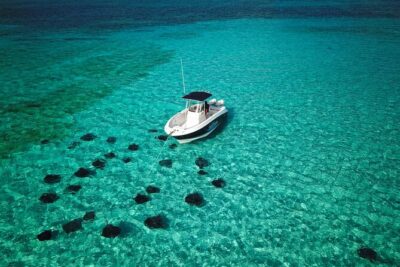
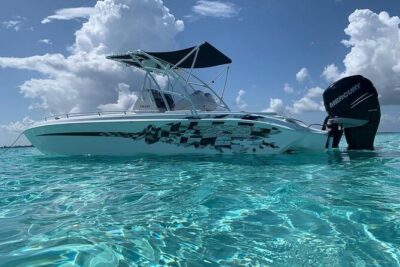
Stingray City Experience Plus Two Snorkeling spots Private Boat
Read our review →Browse the lists this tour appears in